Falsely Accused of Using AI: What to Do in the First 24 Hours and at the Hearing
An email arrives from your instructor. The subject line mentions academic integrity, and the body says a report has flagged your essay. If you wrote that essay yourself, you have been falsely accused of using AI, and the next day matters more than the next month. This guide is a calm, step-by-step account of what to say first, what to gather within 24 hours, how the meeting usually works, what rights most policies give you, and what not to do while you wait.
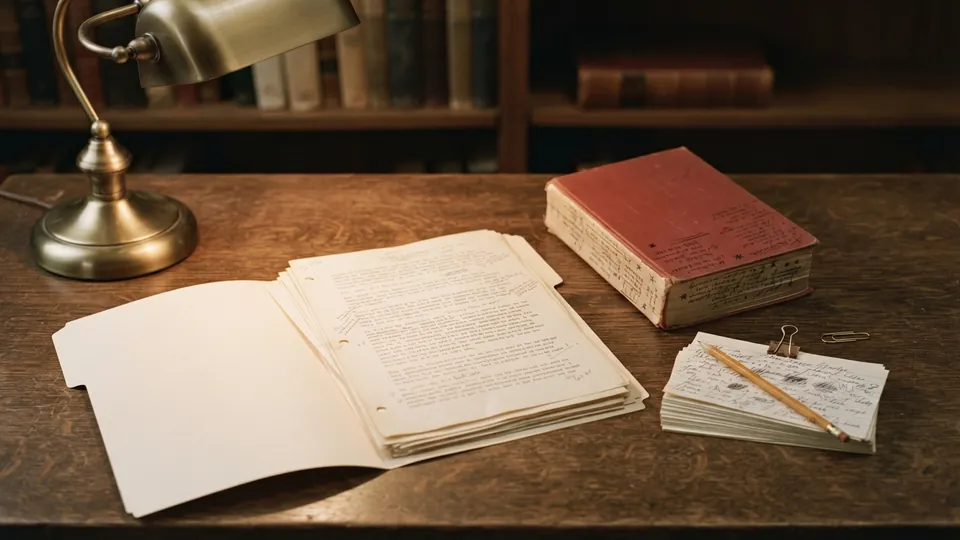
None of it requires you to argue about software. It requires you to show the work.
In short: Reply within a day, politely and briefly: you wrote the essay, you welcome a meeting, and you will bring your drafts. Then collect version history, notes, sources and earlier work. At the meeting, walk through how the essay grew. Do not rewrite it, and do not argue about which detector was used.
Why students get falsely accused of using AI
A false positive is a detector labelling human writing as machine writing. The 2023 study by Weber-Wulff and colleagues in the International Journal for Educational Integrity ran 54 test documents through 14 detectors, Turnitin among them, and concluded that the tools were "neither accurate nor reliable."
The error is not evenly spread. Liang and colleagues at Stanford tested seven detectors on 91 essays written by non-native English speakers for the TOEFL exam. More than half were flagged as AI-generated, an average false-positive rate of 61 percent, and 89 of the 91 essays were flagged by at least one tool. Essays by American eighth graders were almost never flagged. The difference was vocabulary range: plainer word choice reads as machine-like to a statistical model.
The vendors say much the same. Turnitin's chief product officer wrote in May 2023 that scores under 20 percent were unreliable enough to earn an asterisk, that the first and last sentences of a document produced extra false positives, and that educators should use the score "to start a meaningful and impactful dialogue," which is a long way from proof. Vanderbilt University disabled the feature that August, noting that a one percent error rate across its 75,000 yearly submissions would mean roughly 750 wrongly flagged papers. A student falsely accused of using AI is inside a well-documented error, and the people deciding the case have usually read the same numbers.
The first reply: what to say when you are falsely accused of using AI
Answer within 24 hours. Silence reads as avoidance, and a long defensive essay reads as panic. The reply should do three things: state plainly that you wrote the work, accept the meeting, and name the evidence you will bring. Keep it under 120 words.
Something like this works: "Thank you for letting me know. I wrote this essay myself and I am confident the flag is a false positive. I would welcome a meeting at your earliest convenience. I will bring my Google Docs version history, my reading notes on the text, my outline, and two earlier essays from this course so you can compare the voice. Please let me know if there is anything else you would like me to prepare." Do not attach twelve files, and do not apologise for something you did not do. If the notice came from an integrity office rather than the instructor, add one request: a copy of the policy and procedure you are now inside.
The first 24 hours: what to gather
Evidence has a shelf life. Version history can be cleared, browser tabs close, and the memory of which night you wrote which paragraph fades fast. Collect everything the same day, in the order of how persuasive it is. Our guide to using essay drafts as evidence covers the mechanics; the table below ranks the categories.
| Rank | Evidence | Why it persuades | How to capture it today |
|---|---|---|---|
| 1 | Cloud version history with timestamps | Shows the essay growing across sessions; generated text arrives complete | Open version history in Google Docs or Word online, name the key versions, export the file |
| 2 | Dated drafts and outlines | Files with different dates show stages of thinking | Copy every draft to a dated folder; edit none of them |
| 3 | Reading notes and annotated text | Marginalia and page references prove you built the argument from the text | Photograph annotated pages, scan index cards, export highlights |
| 4 | Earlier graded work in the same voice | A consistent voice across a semester is hard to fake and easy to recognise | Gather two or three past essays with the grader's comments |
| 5 | Research trail | Library checkouts, database searches and browser history for cited sources | Screenshot library history; export browser history for the writing dates |
| 6 | Witness accounts | A classmate, tutor or writing-centre appointment that saw the essay in progress | Ask for a short dated email; do not script it |
| 7 | A second detector's score | Weak: one unreliable tool contradicting another | Lead with the rows above |
The first three rows do most of the work. A version history that shows a thesis sentence rewritten four times over three evenings is the single most convincing artefact a student can bring, which is why Google Docs version history as proof of authorship has its own guide.
How the meeting or hearing usually works
Most institutions run a two-stage process: an informal conversation with the instructor, who may decide the matter ends there, and, if needed, a formal hearing run by an integrity office or a dean. Both stages follow written policy, and that policy is public. Read it before you walk in.
Policies differ, but most give a student falsely accused of using AI the same core rights: written notice of the specific allegation and the evidence behind it; a chance to respond, in writing or in person, before any decision; the right to bring an adviser or support person; the right to see what the panel sees, including the detector report; and a right of appeal on stated grounds. If any of these is missing from your notice, ask for it in writing; a polite request for the report and the policy puts the burden where it belongs.
The meeting itself is usually short. The instructor explains the flag, you explain the essay, and the instructor asks questions about it. Those questions are the real test: why you chose a particular quotation, what a term in your third paragraph means, how you would argue the opposite case. A student who wrote the essay answers easily. Prepare for that conversation, not for a debate about software.
How to present a draft trail and reading notes
Bring a single folder, physical or digital, in date order: notes, outline, first draft, version history, final. Then narrate the essay's growth in five minutes or less. "I read the play in the first week and marked these passages. My first thesis was too broad; the version from the 14th shows me narrowing it. The paragraph on Abigail came after the seminar on the 16th."
Reading notes carry particular weight in a literature course because they show the argument emerging from the text. If your notes on The Crucible record that you stopped at Proctor's "I have given you my soul; leave me my name!" and asked in the margin why a name should matter more than a life, then the paragraph built on that question has a visible origin. That is what close reading as a method looks like from the outside: a trail of specific observations that a generator does not leave behind. There is a grim fit, too: Miller's court convicts on spectral evidence, on testimony nobody can check, and a detector score is the same kind of evidence.
For the complete inventory, from file metadata to witness statements, see how to prove you did not use AI.
What not to do while you wait
Do not rewrite the essay. Students sometimes offer to "fix" the flagged passages or resubmit a version that scores lower. This destroys your strongest evidence, the original draft trail, and it looks like an admission. The essay you submitted is the essay you defend.
Do not argue about the detector's brand or its algorithm. Whether the score came from Turnitin or GPTZero, the instructor did not build the tool and cannot defend it, and an attack on the software invites an attack on you. One sentence is enough: "I understand these tools have documented false positives, and I would rather show you how I wrote this." Then show them.
Do not post the accusation online before the process finishes, and do not run your essay through paraphrasing tools to see what changes; either can turn a false-positive case into a conduct case of its own. If the process seems to be going wrong, the right escalation is the appeal route in the policy, or a student advocate or ombudsperson.
Frequently asked questions
Can I be punished on a detector score alone?
Policies vary, but most now say no, and Turnitin's own guidance states that its percentage should not be used as the sole basis for action. If your notice cites nothing but a score, ask in writing what other evidence supports the allegation.
What if I have no drafts because I wrote in one sitting?
A single sitting still leaves traces: the version history of that session, your reading notes, browser history for sources, and earlier essays in the same voice. Bring what exists and say plainly how you wrote.
Should I bring a lawyer if I am falsely accused of using AI?
For an informal meeting with an instructor, no. For a formal hearing, most policies allow an adviser or support person; check whether that person may speak for you or only sit with you. A student advocate from the students' union or the dean's office is usually the better first call.
Conclusion: being falsely accused of using AI is a process, and you can walk it
Being falsely accused of using AI feels like a verdict. In practice it is a question, asked by a tool with a known error rate, and questions can be answered. Answer it the way a student who wrote the essay would: promptly, briefly, with the folder open. Say you wrote it, collect the trail within a day, learn the policy, narrate the essay's growth at the meeting, and refuse the two temptations of rewriting and arguing about software. If the essay is yours, the evidence exists, and this is how you show it. For the wider picture, start at the Authorship pillar.
The essays on this site are study companions for reading and writing about literature; they are never submission-ready coursework.
Sources
- Liang, Yuksekgonul, Mao, Wu and Zou (2023), "GPT detectors are biased against non-native English writers", Patterns (arXiv preprint): the 61 percent average false-positive rate on TOEFL essays and the near-perfect results on US eighth-grade essays
- Weber-Wulff et al. (2023), "Testing of detection tools for AI-generated text", International Journal for Educational Integrity: the 14-tool test and the finding that detectors are "neither accurate nor reliable"
- Vanderbilt University, "Guidance on AI detection and why we're disabling Turnitin's AI detector" (2023): the 75,000 submissions and 750 possible false accusations
- Turnitin, "AI writing detection update from Turnitin's Chief Product Officer" (May 2023): the asterisk under 20 percent, the first-and-last-sentence false positives, and the advice to use the score to start a dialogue